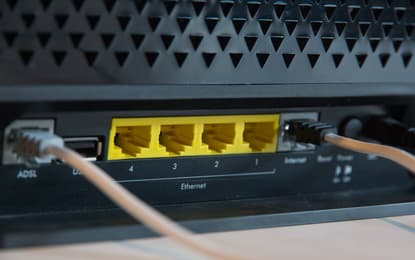
Internet load balancing or fail-over for multiple internet
connections can seem like a tight rope walk, but it doesn't have to be. There
are multiple ways to accomplish it, from point products to routers and firewalls.
Let's take a look at the options and alternatives.
After decades of use, enterprises are looking for MPLS
alternatives. To be considered a viable alternative, a network must match MPLS’
service levels for predictability and consistency, while avoiding its pitfalls of
cost, rigidity and capacity constraints.
Organisations looking for a branch office firewall upgrade,
refresh or deploying firewalls to new sites, need to consider multiple different
elements. Let's walk through all of the major factors to consider for a branch
firewall and why organisations should consider SD-WAN, and more recently Secure
Access Service Edge (SASE) as part of their next-generation of branch network
security.
Software-Defined WAN (SD-WAN) is a networking technology that
seamlessly connects branch offices, HQs cloud and data centers over broadband
internet rather than MPLS leased lines.
The global pandemic has forced knowledge workers to move out
of their offices en masse to the isolated environment of their homes. Most will
return to the office at some point, even if only part-time, as companies adjust to
social distancing measures meant to keep employees safe.
Since its premier over a decade ago, SD-WAN was adopted by
enterprises as the go-to-technology for preparing their network for the digital
transformation.
For several years now, the network evolution spotlight has
been on SD-WAN, and rightfully so. SD-WAN provides big advancements in connecting
branch locations into central data centers in a cost-effective manner. It is the
networking equivalent of a killer application that allows companies to use a variety
of transport mechanisms besides MPLS and to steer traffic according to business
priorities.
Storage as a service (STaaS) is a managed service model for
purchasing data storage based on consumption, where a company only pays for what
they use, typically on a per-GB per-month basis.
Calculating the cost of SD-WAN can be complicated, especially
when it comes to CAPEX vs OPEX and ambiguous ROIs. With so many vendors promising
massive savings over MPLS internet connections, SD-WAN is currently been touted as
one of the hottest categories in networking today. Take a closer look at the costs,
considerations, potential savings and leverage the SD-WAN calculator to estimate
your organisations SD-WAN cost.
WAN optimization has been with us for a long time. Born
alongside expensive and capacity constrained WAN connectivity, such as MPLS, WAN
optimization appliances allowed organizations to squeeze more bandwidth out of thin
pipes through compression, and prioritize traffic of loss-sensitive applications
such as remote desktops.
Last week, Cato Networks announced the results of the 5th
annual IT survey, The Future of Enterprise Networking and Security: Are You Ready
for the Next Leap. It was a massive undertaking that saw 2,376 participants from
across the globe provide detailed insights into how their organizations responded to
the COVID-19 crisis, their plans for 2021, and what they think about secure access
service edge (SASE).
The global pandemic has forced many organizations around the
world to send their workers home to support social distancing mandates. The process
happened suddenly – almost overnight – giving companies little time to prepare for
so many people to work remotely. To keep business functioning as best as possible,
enterprises need to provide secure remote connectivity to the corporate network and
cloud-based resources for their remote workers.
Digitalization, work-from-anywhere, and cloud computing have
accelerated SASE offerings to address the need for secure and optimized access,
anytime, anywhere, and on any device.
Industry 4.0 represents the next phase of innovation in
production processes, merging traditional systems with new digital technologies
(IoT, AI, big data, AR, robotics, M2M, real-time analytics, and so on), facilitating
automation, agility, and efficiency to create a world of smart manufacturing.
As enterprises set out to modernize their networks, SD-WAN has
become a key networking technology for connecting offices. But with COVID-19, users
transitioned to work at home, not in the office.
With the rising popularity of SD-WAN, there is a growing
debate that WAN optimization is becoming obsolete. SD-WAN is gaining acceptance and
for good reason. It creates an intelligent overlay of multiple transports on your
WAN to efficiently and automatically route traffic over the most optimal path.
SD-WAN has quickly become the go-to technology for enterprises
seeking to leverage the cloud and embrace digital transformation. Yet, much
confusion still exists about what exactly is an SD-WAN, and how the technology
works.
Digital transformation is all about agility. SD-WAN enables
organisations to be more agile in multiple different ways. Such as the ability to
rapidly stand-up a new site with secure internet and inter-office connectivity,
without the need for additional security appliances, make policy changes across
multiple sites on-the-fly, gain real-time visibility of users and connections,
on-board new VPN users for remote work without worries license or connection limits.
A good starting point in explaining why cloud-native SD-WAN is
so compelling from a security perspective is the shortcomings of two older WAN
solutions: MPLS and appliance-based SD-WAN.
Internet-based VPN vs MPLS was the debate for some time, WAN
technology has evolved in recent years. During that time, SD-WAN has emerged as an
enterprise WAN connectivity solution that provides a combination of cost efficiency,
agility, and cloud-friendliness that neither MPLS nor Internet-based VPN can match.
From pairing MPLS with a backup internet connection, to
link-bonding for aggregate last-mile, SD-WAN introduces new ways to handle old
problems, with policy-based routing, active/active links, packet loss mitigation,
and quality of service (QoS).
You've probably heard about SD-WAN and its promise to
transform enterprise networking as we know it. And, by enterprise networking we mean
the use of MPLS at the core of enterprise networks. So, to SD-WAN or to MPLS? Here
is what you need to consider.
To meet the needs of a global enterprise, our network
architectures need to evolve as well. Which architectural approach will best serve
your needs: MPLS, public internet or cloud networks?
SD-WAN has become more than just a network for connecting
locations. The rise of cloud, mobile, and business agility demands has required
SD-WAN to become smarter by providing security, optimization, intelligence, and
better reach. These changes in SD-WAN can be broken down into three phases,
reflecting the ways that SD-WAN technologies have adapted over time to the demands
of business requirements.